AI coding tools are making software implementation dramatically faster. A developer can describe a feature in natural language and have a prototype running within minutes. But as AI-generated code becomes easier to produce, the need for precise software specifications grows.
That creates a familiar software engineering problem. Requirements are often incomplete, ambiguous, or open to interpretation. The difference now is speed. An ambiguous requirement can become working code almost immediately.
For simple applications, that may be acceptable. For systems with complex business rules, regulatory requirements, security controls, or long maintenance lifecycles, it is not. The question is no longer just how quickly AI can generate code. It is how precisely we can define what that code is supposed to do.
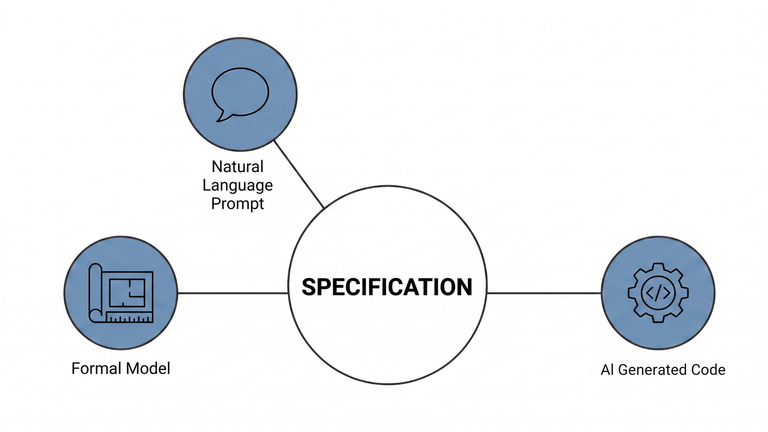
This is where Model-Driven Architecture (MDA) becomes highly relevant. Instead of relying on natural-language prompts as the primary specification, teams can capture important decisions about structure, behavior, constraints, and calculations in explicit models before implementation begins.
How AI Coding Repeats an Old Software Engineering Problem
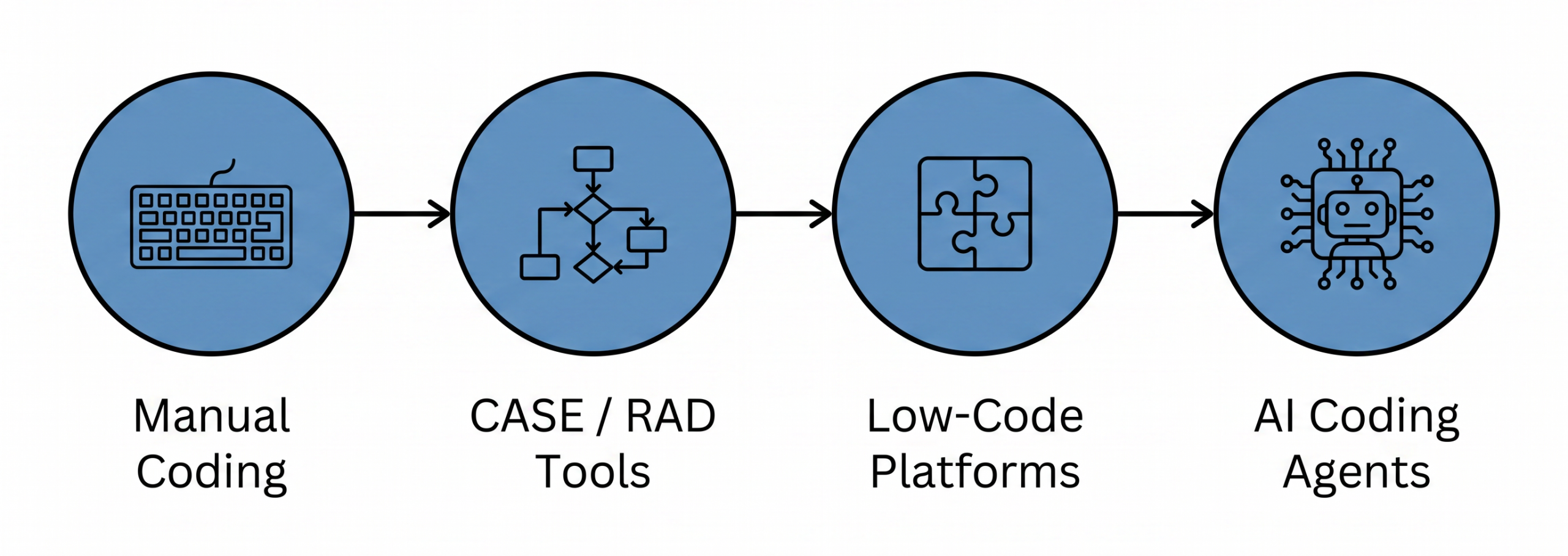
AI coding may feel new, but the underlying challenge is not. Software engineering has spent decades trying to move developers away from writing every implementation detail by hand.
Rapid Application Development (RAD) tools and Computer-Aided Software Engineering (CASE) tools both aimed to raise the level of abstraction. They allowed developers to work with diagrams, visual components, and higher-level representations of systems.
These approaches improved productivity, but they did not remove the need for architectural decisions or precise business rules. Applications could still reach production with tightly coupled logic, inconsistent assumptions, and poorly documented behavior.
AI coding agents take this idea much further. They can turn a short description into database schemas, APIs, application logic, tests, and user interfaces with very little manual coding.
That changes the risk profile. If the requirement is incomplete, the implementation can be incomplete too. The difference is that the error can now spread across a large amount of generated code before anyone notices it.
The problem is not that AI generates code too quickly. The problem is that implementation has become much faster than specification.
Why Ambiguous Requirements Create Risk in AI Coding
One of the biggest risks in AI-generated code is the unstated rule.
Consider an expense-approval system. A requirement might say:
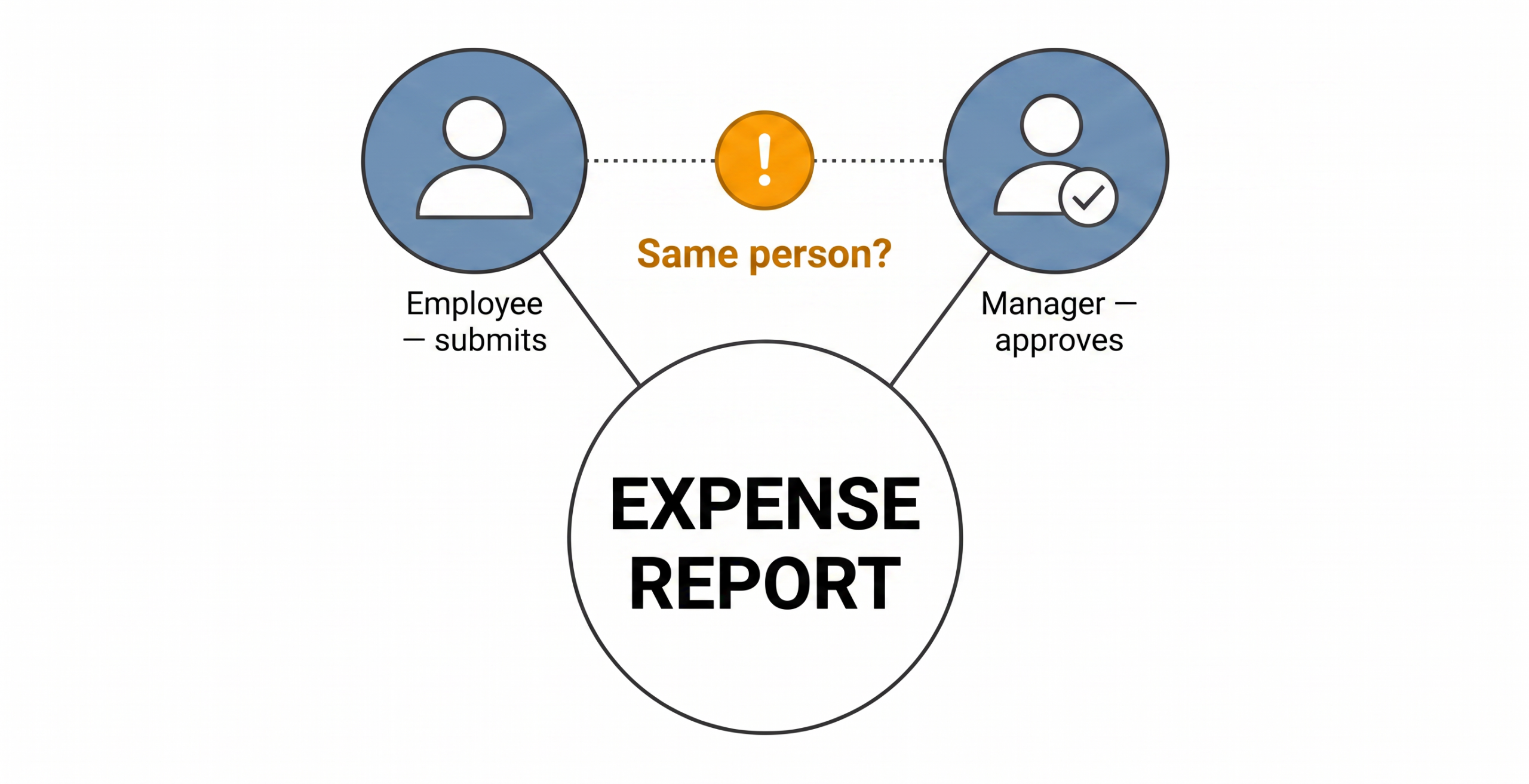
Employees submit expense reports, and managers approve them.
That is enough for an AI coding agent to begin producing an implementation. It could generate an ExpenseReport table, submission and approval endpoints, authentication logic, and an interface for managers.
But what happens when the employee submitting the expense report is also a manager?
Can that person approve their own report?
The requirement does not say.
A human developer might recognize the possibility and ask for clarification. An AI coding system should not be expected to infer the organization’s approval policy from an unstated assumption. The missing rule could therefore become a missing control in the implementation.
The issue becomes more serious as the number of rules grows. Approval limits, delegation, separation of duties, reporting periods, audit requirements, exception handling, and role-based permissions all introduce conditions that may not fit neatly into a short prompt.
The more important the omitted rule, the greater the potential consequence.
Why Natural Language Prompts Are Not Enough for Complex Software
Natural language is useful for discussing requirements and exploring what a system should do. It becomes less precise when the specification depends on invariants, boundary conditions, and relationships between entities.
Consider the word order.
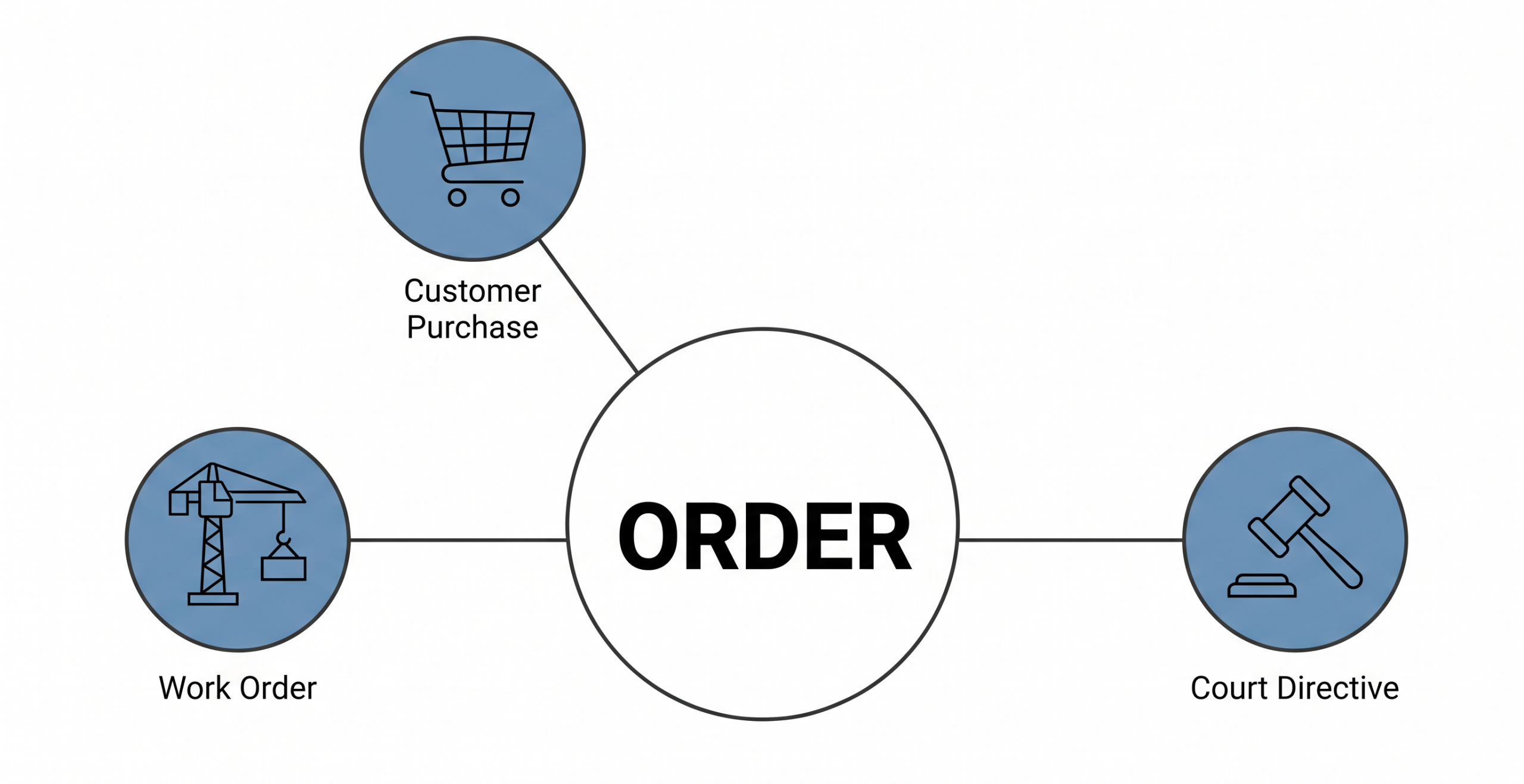
In an e-commerce system, an order may represent a customer purchase. In a manufacturing system, an order may represent a production work order.
A requirement such as:
Cancel the order.
is not precise enough.
Which type of order is being cancelled? Who is allowed to cancel it? At what point in its lifecycle can cancellation occur? What happens to payments, inventory, production, or related records?
These decisions cannot safely remain implicit when they affect the behavior of a production system.
AI does not remove this ambiguity. It makes the consequences of the ambiguity appear much faster.
How Model-Driven Architecture Improves Specification Precision
This is where model-driven architecture provides a stronger foundation.
For teams unfamiliar with the term, Model-Driven Architecture is an approach in which important parts of a system are defined in formal or semi-formal models before implementation is generated or completed. Those models can describe structure, behavior, relationships, constraints, and calculations independently of a specific programming language.
A model can capture important parts of the system independently of the technology stack used to implement it. UML, for example, can describe entities, relationships, states, and structural decisions.
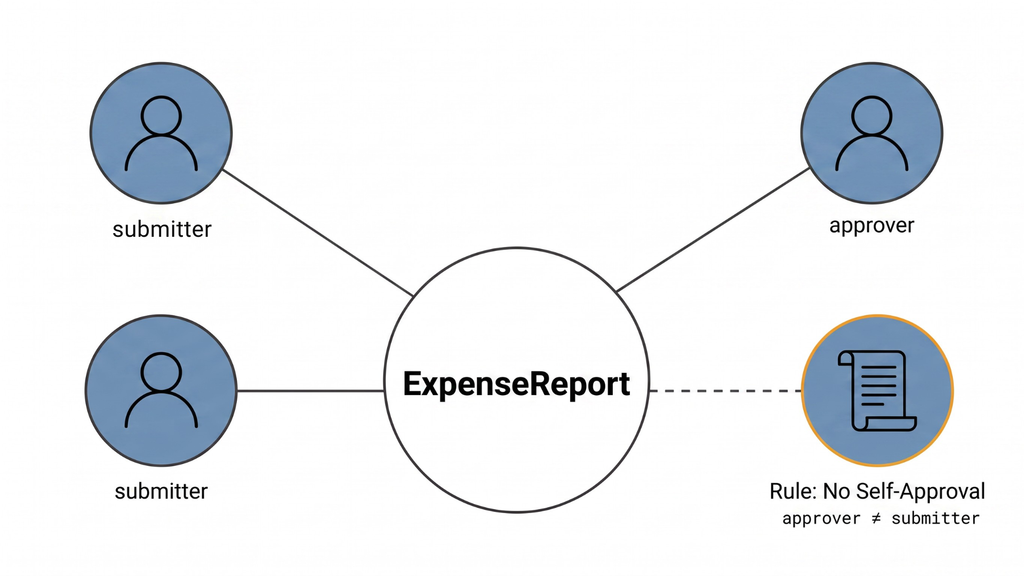
Consider the expense-approval example again. The model might define an ExpenseReport with a submitter and an approver. It can also force a more fundamental design decision: whether an approval is merely a state change or whether it should be represented as a separate entity.
If approval is modeled as an entity, the specification could capture:
- Who approved the report
- When the approval occurred
- The approval decision
- Comments or justification
- The relationship between the approval and the expense report
That decision affects the database, API, audit system, and application logic. A model forces the team to make it explicitly before it is scattered across multiple implementation layers.
Using UML and OCL to Define Business Rules Explicitly
A structural model is useful, but structure alone does not capture every business rule.
A UML model might show that an ExpenseReport has a submitter and an approver. It does not necessarily state that those two people must be different.
This is where Object Constraint Language (OCL) becomes useful. OCL allows teams to express constraints formally.
For example:
context ExpenseReport
inv NoSelfApproval: self.approver <> self.submitter
The important point is not the syntax itself. The important point is that the business rule has been made explicit.
The rule no longer exists only in a requirements document, a meeting, or a developer’s interpretation. It can be reviewed as part of the model and, where tooling supports it, validated automatically.
That changes the role of the model. It is no longer just documentation. It becomes part of the specification against which the implementation is developed and tested.
Models Can Also Define Important Calculations

The same principle applies to derived values.
Suppose an invoice contains several line items. Its totalAmount might be calculated by a backend service, displayed by a reporting application, and independently calculated by an ETL process.
If each system implements the calculation separately, the definitions can drift over time.
A model can define the calculation once:
context Invoice
def: totalAmount : Real =
self.lineItems->collect(li | li.quantity * li.unitPrice)->sum()
The implementation can then be derived from, or at least checked against, that definition.
This does not mean every system needs to generate its entire application directly from an OCL expression. The practical value is that the intended calculation has a defined reference point.
If the business changes the calculation, the model provides a place where that change can be reviewed before it propagates into application code, reports, and data pipelines.
The Developer’s Role Changes in AI-Assisted Software Development
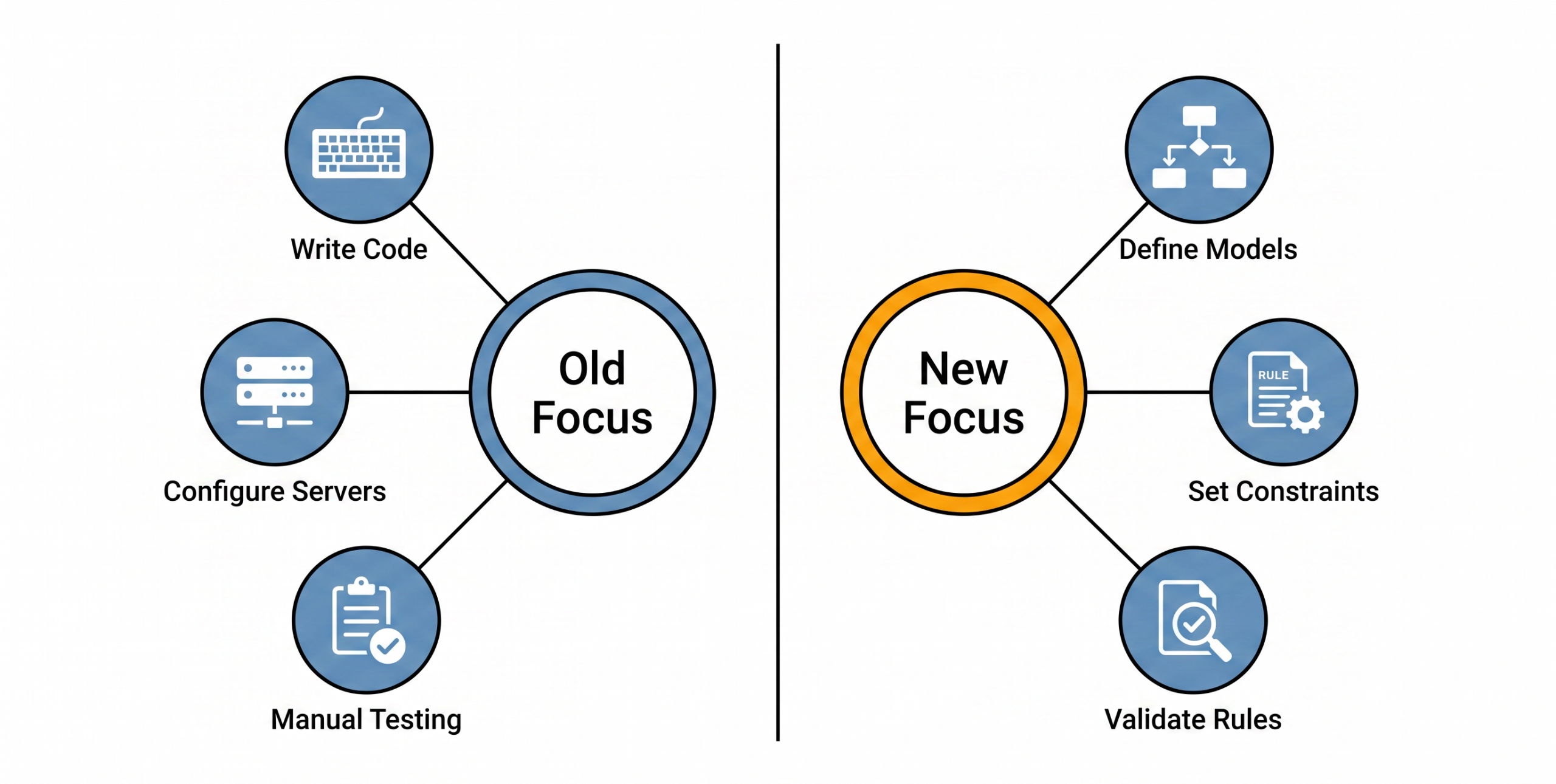
AI code generation does not eliminate the need for software engineers. It changes where their time is most valuable.
When an AI system can generate large amounts of implementation code quickly, manually writing every class, endpoint, test, or configuration file becomes less central to the development process.
The harder questions are higher-level:
- What concepts exist in the domain?
- What precise vocabulary should define customers, orders, approvals, invoices, and payments?
- How are those concepts related?
- Which states and transitions are valid?
- Which constraints must always hold?
- How are important values derived?
- How should the model become an implementation?
- Does the running system still satisfy the specification?
In this environment, the developer moves closer to defining the boundaries within which the implementation must operate.
Testing and validation still matter. Generated code can contain implementation errors even when the underlying model is correct. But the center of gravity shifts toward specification, structure, and rule definition.
The Model Should Not Become Another Document
There is also a trap here. If teams create UML diagrams that quickly become outdated, or write OCL constraints that never connect to development and testing, the model adds little practical value.
For a model-driven approach to work, the model has to participate in the development process.
Ideally, teams should be able to use the model to:
- Validate important business constraints
- Generate or guide parts of the implementation
- Derive database or API structures where appropriate
- Generate tests for defined rules
- Identify which implementation artifacts depend on a changed model element
- Verify that generated code still conforms to the intended design
The exact tooling will vary, but the principle remains the same: the model must stay connected to the software it describes.
When Model-Driven Development Makes Sense
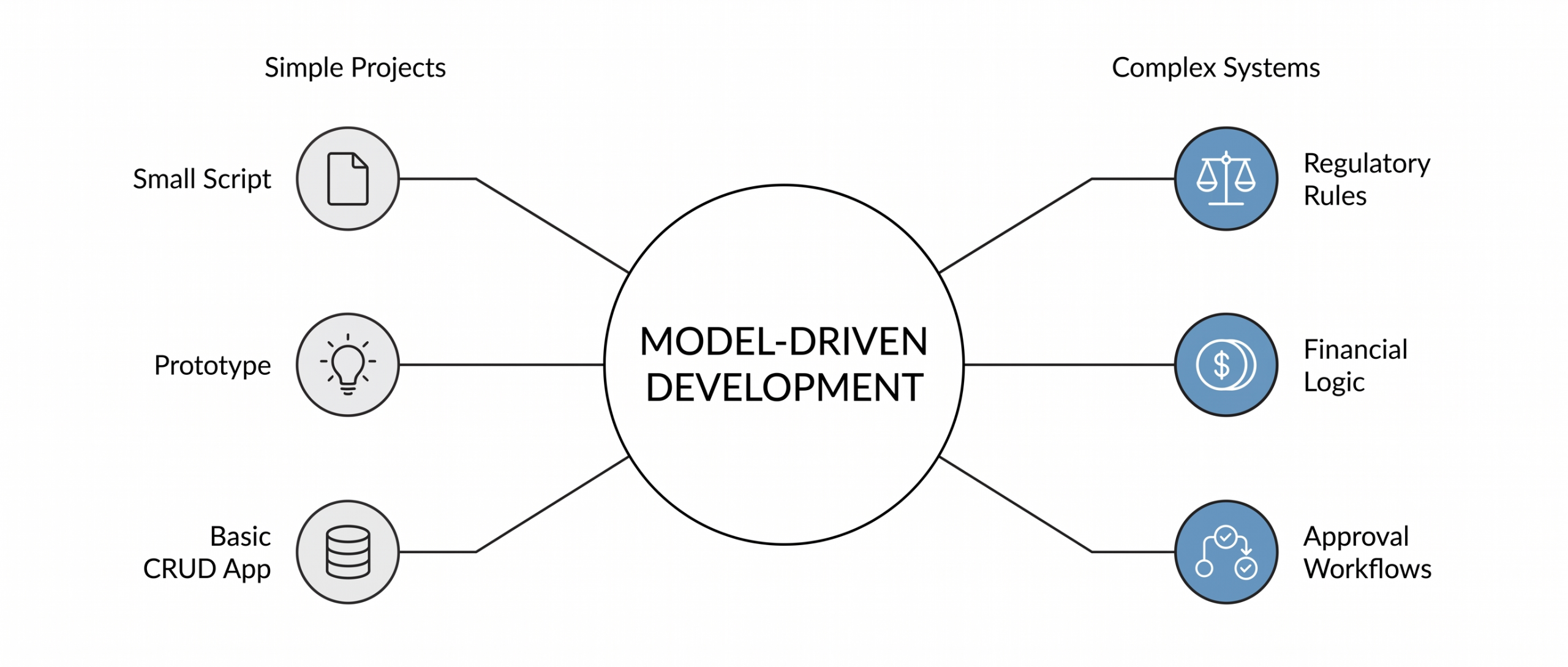
A detailed modeling process is not appropriate for every project.
For a small script, internal tool, prototype, or straightforward CRUD application, the cost of creating and maintaining a formal model may outweigh its benefits.
The trade-off changes when the consequences of an incorrect implementation become significant.
Model-driven development makes more sense for systems with:
- Complex regulatory requirements
- Financial or transactional rules
- Strict security controls
- Complicated approval workflows
- Large numbers of business invariants
- Long maintenance lifecycles
- Multiple applications sharing the same domain rules
- High auditability and traceability requirements
In these environments, generating code faster does not solve the specification problem. It can make the problem more urgent.
Why Precise Specifications Matter More as AI Coding Becomes Cheaper
AI coding is reducing the cost and time required to produce software. That shifts part of the engineering bottleneck away from implementation and toward specification.
If an AI system can produce thousands of lines of code in a short time, the important question is whether those lines implement the right system.
Natural-language prompts still matter. They are useful for describing goals, exploring requirements, and communicating with development tools. But they are not always sufficient to define the rules that a critical system must obey.
Models provide another layer of precision.
UML can describe what exists and how those things relate. OCL can express constraints that must hold. Formal derivations can define important calculations. The resulting specification can then guide AI-generated implementation and provide a basis for evaluating that implementation.
The goal is not to replace prompts with diagrams or to force every software project into a heavyweight modeling process.
The goal is to put important decisions somewhere more precise than a conversation with an AI can provide.
As code generation becomes faster, that distinction matters more. The competitive advantage may no longer come from who can generate the most code, but from who can define the system precisely enough to trust the generated code.
FAQs
What is the biggest risk of AI-generated code?
The biggest risk is that ambiguous or incomplete requirements become ambiguous or incomplete implementations at high speed.
Why are natural-language prompts not enough for complex software?
Because complex software depends on explicit business rules, constraints, lifecycle states, permissions, and calculations that prompts may leave unstated.
How do UML and OCL improve software specifications?
UML helps define structure and relationships, while OCL helps express formal constraints and calculations that the implementation must satisfy.
When does model-driven development make sense?
It is most valuable in systems with complex rules, compliance requirements, security controls, long lifecycles, or shared business logic across multiple applications.